Performance Management System : Setting Expectation with Subordinates
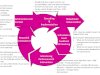
The GROW Model is a coaching framework that helps leaders and employees establish clear expectations, strengthen ownership, and improve performance. It consists of four stages—Goal, Reality, Options, and Wrap-Up (Way Forward)

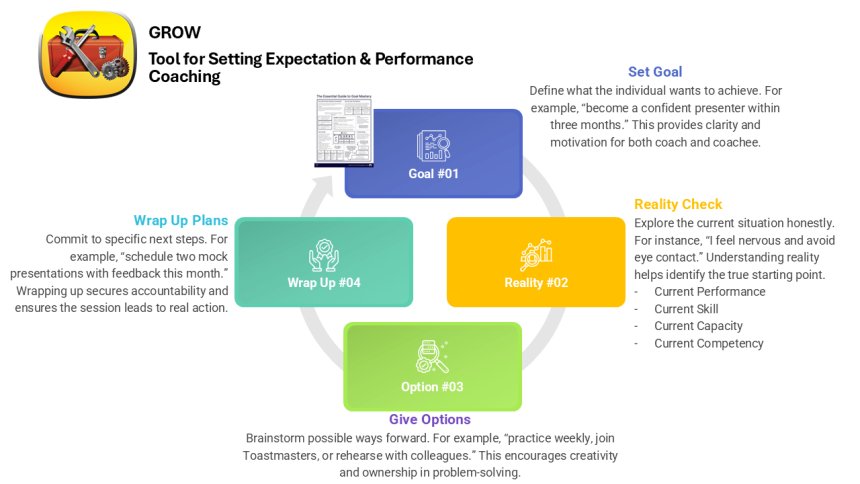
The GROW Model, developed by John Whitmore, provides a structured framework for these conversations by helping leaders and team members jointly define the Goal, understand the current Reality, explore available Options, and commit to the Way Forward. Rather than imposing expectations through top-down instructions, GROW creates alignment through dialogue, ownership, and mutual commitment.
When expectations are co-created and clearly understood at the start of the cycle, performance conversations become more objective, trust increases, accountability improves, and both parties have a shared reference point for measuring progress throughout the year. From an Altruist Leadership perspective, GROW reflects Service Philosophy by creating clarity, Servant Mindset by developing ownership, and Stewardship by establishing a foundation for sustainable performance and continuous growth.The GROW Model Explained
|
Stage |
Purpose |
|
G — Goal |
Define clearly what the individual wants to achieve. Provides direction, motivation, and a shared destination for both coach and coachee. |
|
R — Reality |
Explore the current situation honestly. Understanding reality identifies the true starting point for growth. |
|
O — Options |
Brainstorm possible ways forward. Encourages creativity, ownership, and personal problem-solving. |
|
W — Wrap-Up |
Commit to specific next steps with accountability. Ensures the conversation produces real action, not just insight. |
G — Goal: Defining the Destination
The goal phase activates motivation. A goal that belongs to the team member generates exponentially more commitment than a goal assigned by the leader. Powerful goal-setting questions:
• "What is one leadership behaviour you want to strengthen over the next three months?"
• "If this period goes really well, what will you have achieved that you're most proud of?"
• "What result do you most want to be associated with at the end of this quarter?"
• "On a scale of 1–10, how important is this goal to you personally? What would make it a 10?"
|
Clarity Principle: A goal stated vaguely will produce vague effort. Use SMART criteria (Specific, Measurable, Achievable, Relevant, Time-bound) to sharpen the goal until both parties can visualise exactly what success looks like. |
R — Reality: Mapping the Current State
Honest exploration of reality is the most frequently skipped step in performance coaching — and its omission is the most common reason coaching fails to produce change. Reality questions explore:
• Current performance: "On a scale of 1–10, how effectively are you currently doing X? What evidence supports that number?"
• Current skill: "What do you find most challenging about this area? What skills feel less developed?"
• Current capacity: "What else is competing for your time and energy right now?"
• Blockers: "What is getting in the way of performing at the level you'd like to?"
• Context: "What has already been tried? What happened?"
|
⚠️ Common Coaching Mistake: Jumping from Goal directly to Options, skipping Reality entirely. The Options phase is only useful when both parties share an honest, evidence-based picture of where things stand today. |
O — Options: Generating Possibilities
The Options phase is where the coachee's creativity and problem-solving capability is activated. The most powerful question in the Options phase is: "What else?" Ask it repeatedly. The genuine insights emerge when the coachee goes beyond the obvious.
• "If you could try anything without fear of failure, what would you do?"
• "What have other leaders done in a similar situation that you admire?"
• "What resources, relationships, or strengths could you draw on that you haven't fully used?"
• "Of all the options we've explored, which feels most energising to you?"
W — Wrap-Up: Committing to Action
The Wrap-Up phase converts insight into commitment. Effective Wrap-Up includes:
• A specific action commitment: "I will do X, by Y date." Vague commitments produce vague results.
• An accountability mechanism: "How will I know you've done it? How will you track your own progress?"
• A next check-in: "Let's reconnect on [date] to review progress. What would you like me to ask you then?"
• A motivational close: "What does successfully completing this action mean to you?"
|
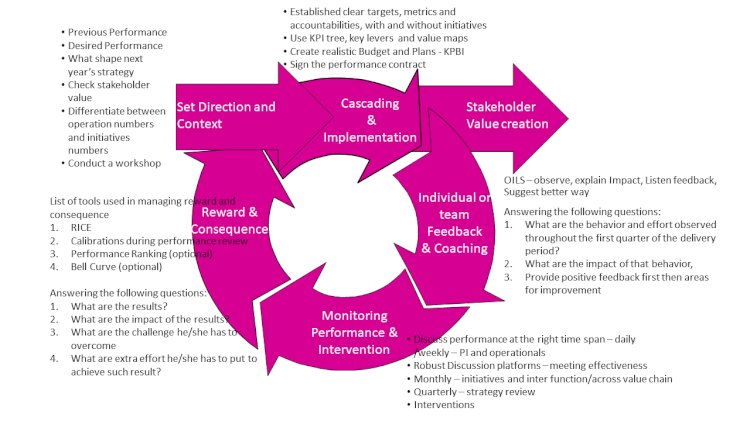
💡 Leader's Reminder: GROW must be done at least once at the beginning of each performance cycle to set clear goals and establish a shared baseline. Without this, all subsequent feedback conversations (OILS) and appraisals (RICE) lack an agreed foundation. |
Share
 Like
0
Like
0
 Dislike
0
Dislike
0
 Love
0
Love
0
 Funny
0
Funny
0
 Angry
0
Angry
0
 Sad
0
Sad
0
 Wow
0
Wow
0