What Is AI Capability Development? A Practical Framework for Organizations
A practical guide to building AI capability in organizations through competency frameworks, AI readiness assessment, governance, and workforce skill development. This article explains how organizations build AI capability through structured competency frameworks, workforce skill development, governance models, and AI readiness assessment to support enterprise transformation.

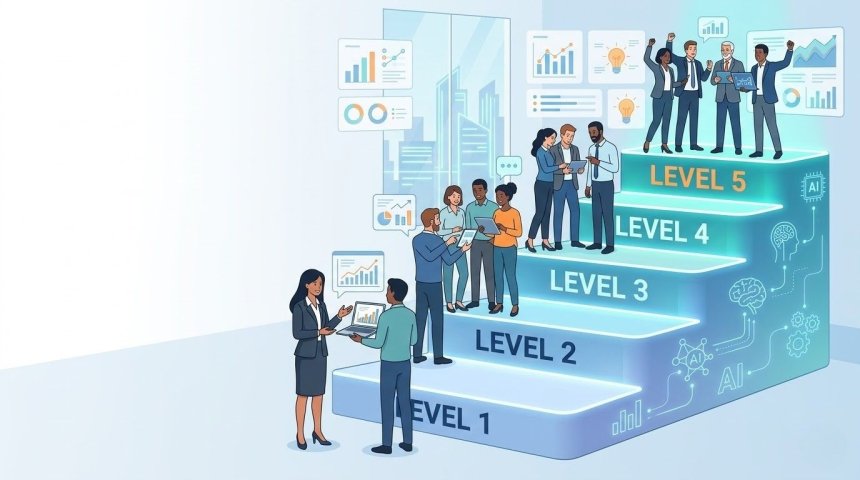
AI Capability Framework: How Organizations Build AI Skills from Level 1 to Level 5 for Non-Tech Companies
Artificial Intelligence capability is becoming a core organizational competency. Companies are now building structured AI capability frameworks to guide employee skills from basic AI awareness to advanced AI-driven decision-making. This article explains a five-level AI capability model, the competencies required at each level, and how organizations can implement AI training and assessment programs.
When we write this blog, we have experienced 3 major transformation projects in retail, oil and gas, education, and services companies. We hope our valuable experience not just in design, but also in implementation and effectiveness measures will give readers the best insights in advance capability building. We have completed all these last year, and this year we are scaling up our services to many other industries and company sizes.
What Is AI Capability Development?
We will conclude the definition of AI Capability after we walk through these 3 fundamentals in capability.
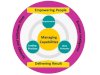
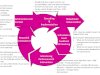
First and foremost, Capabilities are the whole effects of competent people working on a reliable system with tools that will ensure results are repeatable and replicable for scaling up. This is essential in all Operational Excellence frameworks. The whole of these 3 component is greater than the sum of its parts, said Aristotle.
When we discuss competencies, we usually associate skills with Bloom's Taxonomies and for AI Capabilities, especially in adopting LLMs and Agentics, cognitive domain is highly relevant.
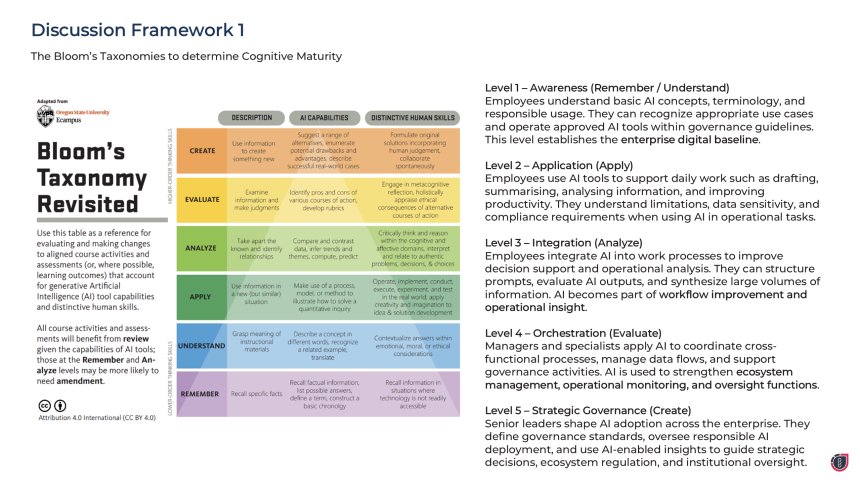
Blooms Taxonomy for Cognitive Maturity
Bloom’s cognitive progression can structure AI capability development across the organization. The objective is not to develop AI model builders, but to cultivate AI-enabled professionals and integratorswho can responsibly apply enterprise AI tools, strengthen workflows, and support governance across the ecosystem.
Level 1 – Awareness (Remember / Understand)
Employees understand basic AI concepts, terminology, and responsible usage. They can recognize appropriate use cases and operate approved AI tools within governance guidelines. This level establishes the enterprise digital baseline.
Level 2 – Application (Apply)
Employees use AI tools to support daily work such as drafting, summarising, analysing information, and improving productivity. They understand limitations, data sensitivity, and compliance requirements when using AI in operational tasks.
Level 3 – Integration (Analyse)
Employees integrate AI into work processes to improve decision support and operational analysis. They can structure prompts, evaluate AI outputs, and synthesize large volumes of information. AI becomes part of workflow improvement and operational insight.
Level 4 – Orchestration (Evaluate)
Managers and specialists apply AI to coordinate cross-functional processes, manage data flows, and support governance activities. AI is used to strengthen ecosystem management, operational monitoring, and oversight functions.
Level 5 – Strategic Governance (Create)
Senior leaders shape AI adoption across the enterprise. They define governance standards, oversee responsible AI deployment, and use AI-enabled insights to guide strategic decisions, ecosystem regulation, and institutional oversight.
Secondly, when we want our system to be effective, we can refer to Effectiveness Level and when we want to design AI Capability, we can adopt JSSB's Seven Effectiveness Level , which was modified from Kirkpatrick, originally:
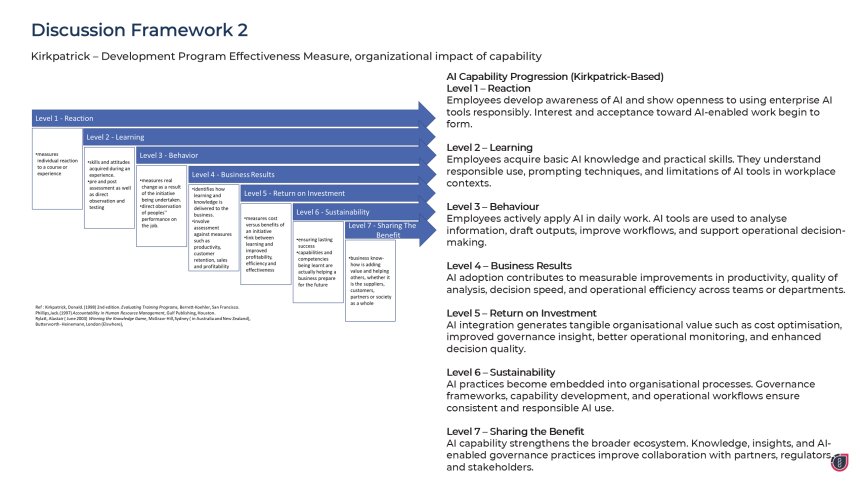
AI Capability Progression (Kirkpatrick-Based)
Level 1 – Reaction
Employees develop awareness of AI and show openness to using enterprise AI tools responsibly. Interest and acceptance toward AI-enabled work begin to form.
Level 2 – Learning
Employees acquire basic AI knowledge and practical skills. They understand responsible use, prompting techniques, and limitations of AI tools in workplace contexts.
Level 3 – Behaviour
Employees actively apply AI in daily work. AI tools are used to analyse information, draft outputs, improve workflows, and support operational decision-making.
Level 4 – Business Results
AI adoption contributes to measurable improvements in productivity, quality of analysis, decision speed, and operational efficiency across teams or departments.
Level 5 – Return on Investment
AI integration generates tangible organisational value such as cost optimisation, improved governance insight, better operational monitoring, and enhanced decision quality.
Level 6 – Sustainability
AI practices become embedded into organisational processes. Governance frameworks, capability development, and operational workflows ensure consistent and responsible AI use.
Level 7 – Sharing the Benefit
AI capability strengthens the broader ecosystem. Knowledge, insights, and AI-enabled governance practices improve collaboration with partners, regulators, and stakeholders.
Thirdly, we want to make the right decision about the tools we want to use in our system. For this, our key reference is the Cynefin framework.
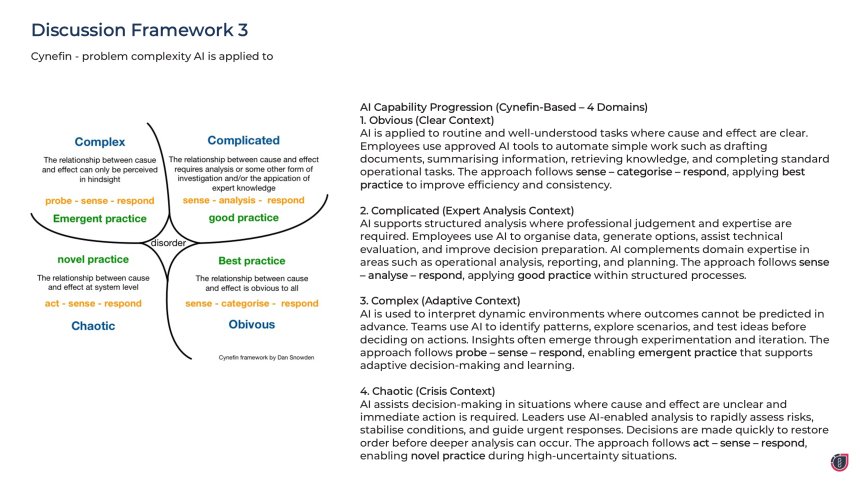
AI Capability Progression (Cynefin-Based)
Level 1 – Clear (Obvious)
AI is used for simple, well-defined tasks with clear rules. Employees apply approved tools for drafting, summarising, and basic information retrieval within established procedures.
Level 2 – Assisted Analysis (Complicated)
AI supports structured analysis where expertise is required. Employees use AI to organise data, generate options, and assist professional judgement in defined work processes.
Level 3 – Augmented Decision (Complicated → Complex)
AI helps interpret larger datasets and identify patterns. Employees combine AI outputs with domain expertise to improve operational analysis and workflow decisions.
Level 4 – Adaptive Operations (Complex)
AI supports decision-making in dynamic environments with multiple variables. Teams use AI to monitor trends, test options, and adapt operational responses across functions.
Level 5 – Strategic Insight (Complex)
AI is used to synthesize large volumes of ecosystem data and inform strategic oversight. Leadership uses AI-augmented insights to guide policy, governance, and enterprise decisions.
Level 6 – Crisis Navigation (Chaotic)
AI helps rapidly analyse emerging situations where cause-effect relationships are unclear. Leaders use AI to stabilise conditions, assess risks, and guide immediate responses.
Level 7 – System Governance (Disorder to Order)
AI capability enables the organisation to continuously interpret complex environments, align decision frameworks, and maintain governance across interconnected systems and stakeholders.
AI Capability Development Definition?
AI capability development is the structured process of building organizational skills(competent people), governance , and operational systems and tools (AI products) required to adopt and scale artificial intelligence across business functions. This is to ensure results reliability, repeatability and replicability to provide advance advantage to the business.
Why Organizations Need AI Competency Frameworks
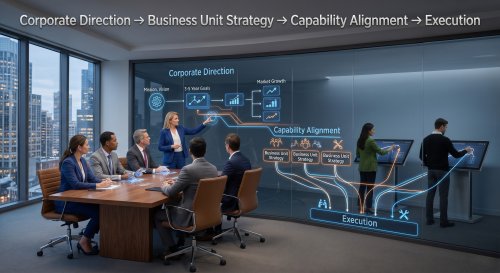
Organizations that approach AI adoption purely as a technology investment often struggle to realize meaningful value. Sustainable AI transformation requires structured capability development that aligns leadership, workforce competencies, governance frameworks, and operating model design.
1. Understanding the Business and Operating Model Before Choosing AI Solutions
Effective AI adoption must begin with a clear understanding of the organization’s business model and operating model. Without clarity on how value is created, how decisions are made, and how workflows operate, organizations risk selecting AI tools that do not address real operational needs. AI should therefore be positioned as an enabler of existing strategic priorities, rather than a standalone technology initiative. Learning about your business key levers from the operating models, is an ongoing process as your SWOT and PESTEL analysis indicate that you need to change; so your AI product choices must be relevant through times and business objectives.
2. Business Process Capability Before AI Capability
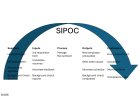
Before employees can effectively leverage AI tools, organizations must first develop strong capabilities in business process mapping, process optimisation, and workflow design. AI produces the greatest impact when applied to well-understood processes with clear inputs, outputs, and decision points. Without this foundation, AI tools may automate inefficiencies rather than improve performance. This is about ensuring the AI drivers in your organisation are well aware of the whole cause-effects across your value chain and not just decide AI adoption based on one process. See our blog on Business Process Mapping
3. Defining the End State and Value Realisation
Many AI initiatives struggle because organizations lack a clearly defined end state for AI adoptionand a structured view of how value will be realized. Organizations must identify the outcomes AI is expected to support, such as productivity improvement, enhanced governance oversight, or better decision intelligence, and establish measurable indicators to track progress. A competency framework helps ensure that capability development is aligned with these strategic outcomes and evolves as AI technologies continue to advance.
For example, a marketing company identifies 3 key levers in their sales success, the success factors must be documented in a flow that can give you the 3R result (reliable, repeatable, replicable), and to scale this with optimum resource, this company know exactly what are they measuring at the end of the value chain. AI adoption can create value across four major areas: revenue growth, operational efficiency, customer intelligence, and strategic decision-making. The key is that AI augments marketing workflows rather than simply automating tasks.
Strategic Impact
When implemented effectively, AI adoption in marketing can lead to:
-
Higher campaign ROI
-
More precise customer targeting
-
Faster content and campaign execution
-
Improved marketing decision-making
-
Stronger competitive positioning
AI Capability Development Framework
Framework Component 1: Organizational AI Maturity
When it comes to organisation capability, the levels are to be developed taking into considerations the 3 fundamentals discussed earlier - people competency, system reliability and tools for scalability. This give us a different level definition with people competencies alone:
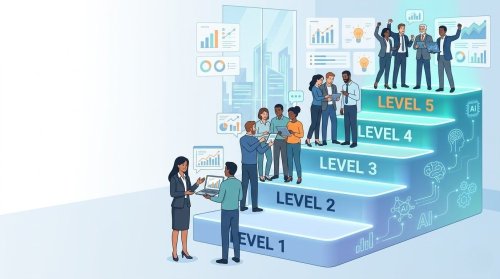
JSSB identifies 5 levels of AI capability for our clients as :
AI Organizational Capability Levels
(People – Systems – Tools – Value Realisation)
| Maturity Stage | Organizational Maturity | People Competency | System Reliability | Tools for Scalability | Value Realisation |
|---|---|---|---|---|---|
|
Level 1
Awareness
|
Early exploration stage | Employees understand AI concepts and basic usage. | Existing systems not yet structured for AI usage. | Individual AI tools used experimentally. | Limited productivity gains and learning. |
|
Level 2
Adoption
|
Operational experimentation | Staff use AI tools to support daily tasks and analysis. | Some data sources structured and accessible. | AI tools used for productivity across teams. | Efficiency improvements in reporting, analysis, and documentation. |
|
Level 3
Integration
|
Process-level AI integration | Teams integrate AI into workflows and decision preparation. | Systems begin enabling structured data flows and AI-supported processes. | AI tools integrated with operational platforms. | Improved operational insights and decision support. |
|
Level 4
Governance
|
Enterprise coordination | Managers and specialists govern AI usage across functions and ensure responsible implementation. | Reliable enterprise data architecture supports AI-enabled monitoring and oversight. | Scalable AI platforms supporting cross-department operations. | Measurable business improvements in performance, oversight, and operational efficiency. |
|
Level 5
Strategic Intelligence
|
AI-enabled organization | Leadership uses AI insights to guide strategy and institutional decision-making. | Systems provide integrated enterprise intelligence across operations. | AI capabilities embedded into enterprise platforms and ecosystem collaboration. | Strategic advantage, enhanced governance capability, and sustained organizational value. |
Talk to our chat bot should you need assistance in developing your business AI Transformation Blueprint.
And we clearly differentiate this with People Competency Level, when used to define training needs to different segments in the organisations. This competency framework helps organisations segment AI training programmes based on employee capability levels:
Framework Component 2: AI People Competency Levels
AI People Competency Levels
(Used for Training Segmentation)
| Competency Level | Typical Roles | Capability Focus | Training Emphasis |
|---|---|---|---|
|
Level 1
AI Awareness
|
All employees, general workforce | Basic understanding of AI concepts and responsible use | Introduction to AI tools, ethical awareness, productivity usage |
|
Level 2
AI Practitioner
|
Operational staff, analysts, specialists | Use AI tools for operational work, reporting, and analysis | Prompt engineering, productivity automation, AI-assisted workflows |
|
Level 3
AI Integrator
|
Process owners, digital champions, innovation teams | Embed AI into workflows, systems, and operational processes | Process integration, automation design, AI workflow optimisation |
|
Level 4
AI Governance Leader
|
Managers, department heads, governance committees | Guide responsible AI adoption and cross-department coordination | AI governance frameworks, risk management, policy design |
|
Level 5
AI Strategic Leader
|
Executives, strategy leaders, transformation leaders | Use AI insights to shape enterprise strategy and innovation | AI-driven decision making, strategic transformation, digital leadership |
Share
 Like
3
Like
3
 Dislike
0
Dislike
0
 Love
2
Love
2
 Funny
0
Funny
0
 Angry
0
Angry
0
 Sad
0
Sad
0
 Wow
4
Wow
4