Culture Intelligence, Culture Excellence & Culture Change: The Key to Organizational Transformation
Discover how Culture Intelligence, Culture Excellence, and Culture Change frameworks help organizations address the “elephant in the room” and drive sustainable transformation, leadership alignment, and business performance.


What is Culture Intelligence?
Culture Intelligence (CQ) is the ability of individuals and organizations to effectively work across cultural differences by adapting communication styles, leadership approaches, and decision-making strategies.
Organizational culture is often described as “the way things are done around here.” Yet in many organizations, culture remains the elephant in the room —everyone senses it influences performance, but few leaders know how to diagnose or transform it effectively.
Today’s organizations operate in increasingly complex and diverse environments. Leaders must manage teams across cultures, adapt to rapid change, and align people with strategic goals. This is where Culture Intelligence, Culture Excellence, and Culture Change become critical.
When properly understood and applied, these concepts help organizations build high-performing cultures that support strategy execution, innovation, and long-term business success.
Expert Insight
“Culture transformation is not achieved through policy changes alone. It requires leadership alignment, employee engagement, and structured culture diagnostics to close the gap between current and desired organizational behaviour.”
— Dr. Jasmiza Yantee Jamalluddin, Principal Consultant and Founder, Jasmiza Solutions
Quick Summary
Culture Intelligence refers to the ability of leaders and organizations to effectively operate across cultural differences. When combined with structured culture change frameworks and leadership alignment, it enables organizations to achieve culture excellence and sustainable business performance.
The Elephant in the Room: Why Organizational Culture Matters
Many companies invest heavily in strategy, technology, and restructuring—yet transformation efforts fail because culture remains unchanged .
Culture affects:
• how decisions are made
• how employees collaborate
• how leaders communicate
• how strategies are executed
Research consistently shows that organizations with strong and aligned cultures experience:
- higher employee engagement
- stronger leadership effectiveness
- better business performance
Ignoring culture can quietly undermine even the best strategies.
Why Culture Intelligence?
Culture Intelligence (CQ) refers to the ability of individuals and organizations to effectively operate across cultural differences.
This includes the capability to:
- understand diverse perspectives
- adapt communication styles
- manage multicultural teams
- build trust across organizational boundaries
Studies have shown that high cultural intelligence improves:
• interpersonal communication
• psychological capital (PsyCap)
• organizational citizenship behaviour (OCB)
In practical terms, leaders with high CQ are better equipped to motivate teams, manage diversity, and navigate change.
Understanding Culture Change
Changing organizational culture is not simply about slogans or new policies. Culture change involves shifting beliefs, behaviours, systems, and leadership practices .
Successful culture change requires:
- diagnosing the current culture
- identifying the desired culture
- aligning structures, leadership behaviours, and processes
Without a structured approach, culture initiatives often fail to produce sustainable results.
Frameworks that Support Culture Excellence
Several established frameworks help organizations understand and transform culture.
OCAI – Organizational Culture Assessment Instrument
The OCAI framework categorizes organizational cultures into four types:
• Clan Culture – collaborative and family-like
• Adhocracy Culture – innovative and entrepreneurial
• Market Culture – competitive and results-driven
• Hierarchy Culture – structured and process-oriented
This diagnostic tool helps organizations understand their current cultural profile and desired future state.
McKinsey 7S Framework
Another widely used model is the McKinsey 7S Framework, which emphasizes alignment between seven organizational elements:
- Strategy
- Structure
- Systems
- Skills
- Style
- Staff
- Shared Values
Culture excellence occurs when these elements reinforce each other rather than operate in isolation.
How Culture Intelligence Drives Culture Excellence
Culture intelligence acts as the bridge between culture change and culture excellence .
Organizations that cultivate CQ among leaders and employees tend to demonstrate:
- stronger collaboration
- greater adaptability
- better leadership alignment
- more resilient organizational performance
In other words, CQ equips organizations to navigate transformation successfully.
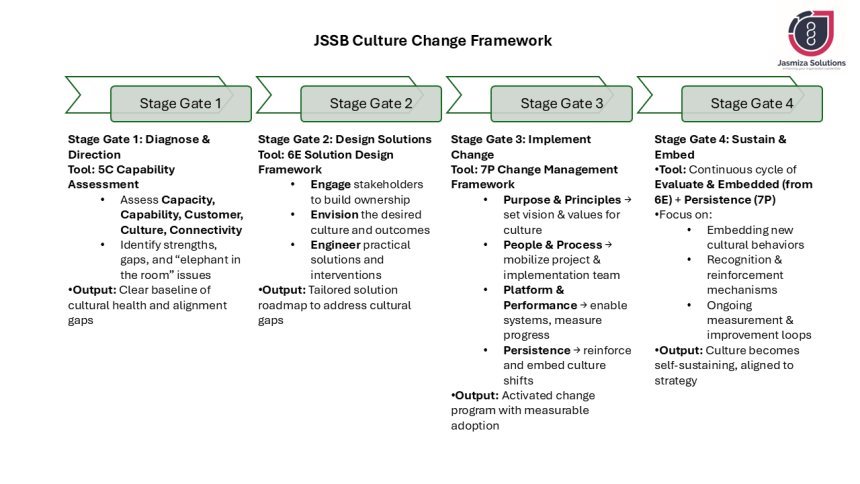
How JSSB Helps Organizations Transform Culture
At Jasmiza Solutions (JSSB), we translate proven culture frameworks into practical transformation strategies.
Our services include:
Culture Intelligence Workshops
Interactive training designed to enhance cultural agility, leadership communication, and collaboration.
Culture Diagnostics and Change Strategy
Using structured tools such as OCAI-style assessments, we help organizations diagnose culture gaps and design transformation roadmaps.
Culture Alignment Consulting
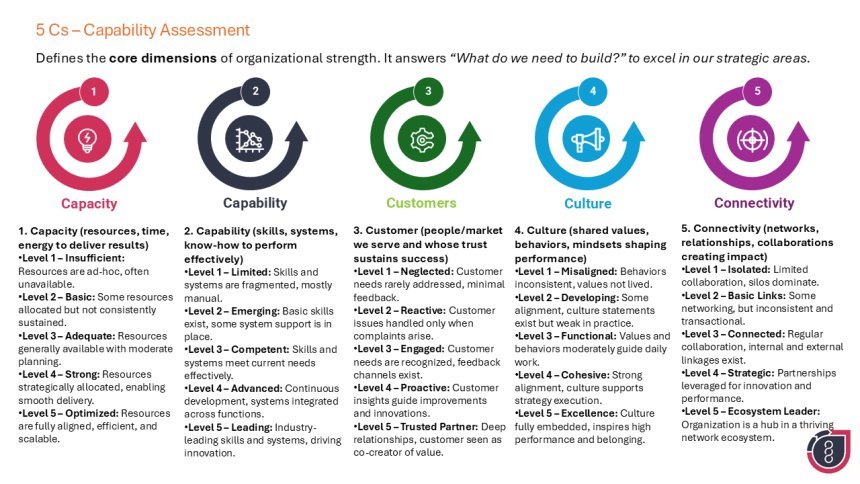
Through our 5C Framework (Capacity, Capability, Customer, Culture, and Connectivity) , we help organizations align people, systems, and strategy to achieve culture excellence.
Next Steps to Transformation
Organizations seeking sustainable transformation should start by asking three key questions:
- What culture do we currently have?
- What culture do we need to achieve our strategy?
- How do we align leadership and systems to support that culture?
The answers often reveal the hidden drivers of performance—and the obstacles to change.
Frequently Asked Questions About Culture Intelligence and Culture Change
What is culture intelligence in organizations?
Culture intelligence (CQ) refers to the ability of leaders and employees to effectively interact with people from different cultural backgrounds and adapt behaviour in diverse organizational environments.
Why is culture important for organizational performance?
Organizational culture influences how employees collaborate, communicate, and make decisions. A strong culture improves engagement, innovation, and overall business performance.
What causes culture change initiatives to fail?
Many culture initiatives fail because organizations focus only on strategy or structure without addressing leadership behaviours, values, and employee engagement.
What frameworks help organizations diagnose culture?
Common frameworks include the Organizational Culture Assessment Instrument (OCAI) and the McKinsey 7S model, which help organizations identify cultural strengths and gaps.
How can leaders build culture excellence?
Leaders build culture excellence by aligning strategy, leadership behaviour, systems, and employee values to create a shared sense of purpose and direction.
People Also Ask
What is culture intelligence in leadership?
Culture intelligence in leadership refers to the ability of leaders to understand cultural differences, adapt communication styles, and effectively manage diverse teams.
Why do culture change initiatives fail?
Many culture change initiatives fail because organizations focus on structural changes while ignoring leadership behaviour and employee engagement.
How can organizations measure culture?
Organizations often measure culture through surveys, leadership assessments, and frameworks such as OCAI or competency-based diagnostics.
Using Competency Frameworks to Support Culture Change
Culture transformation often requires identifying leadership competency gaps .
Tools such as competency matrices and structured assessments help organizations measure:
- leadership capability
- employee skill gaps
- alignment between culture and strategy
Platforms like BakatFit help organizations conduct competency-based assessments that support culture transformation initiatives.
Culture Transformation Self-Assessment
Many organizations struggle to change culture because they lack a structured way to diagnose it.
You may consider asking the following questions:
- Does leadership behaviour reinforce the desired organizational values?
- Are employees aligned with strategic goals?
- Do systems and processes support collaboration and innovation?
- Are middle managers equipped to drive culture change?
If the answer to several of these questions is unclear, your organization may be facing a culture alignment gap.
Jasmiza Solutions works with organizations to diagnose and close these gaps through culture intelligence workshops, leadership development, and structured organizational diagnostics.
Share
 Like
1
Like
1
 Dislike
0
Dislike
0
 Love
0
Love
0
 Funny
0
Funny
0
 Angry
0
Angry
0
 Sad
0
Sad
0
 Wow
1
Wow
1